Wednesday, March 9, 2011

Boy Butter World Tour hits Bangkok

The Grand Palace Chakri Mahaprasad Hall of Bangkok
I always like to run down a little history of the cities or countries I am visiting. Bangkok is the capital of Thailand and, with a population of over eleven million inhabitants, by far its largest city. Its high-rise buildings, heavy traffic congestion, intense heat and naughty nightlife definitely  give you a warm and humid welcome. Bangkok is one of Asia's most cosmopolitan cities with magnificent temples and palaces, authentic canals, busy markets and a vibrant nightlife that has something for everyone gay, straight or whatever. For years, it was just a small trading post at the banks of the Chao Phraya river, until King Rama I, the first monarch of the present Chakri dynasty, turned it into the capital of Siam in 1782, after the burning of Ayutthaya kingdom by Burmese invaders. Since then, Bangkok has turned into a national treasure and functions as Thailand's spiritual, cultural, political, commercial, educational and diplomatic center. The country's official language is Thai. Its primary religion is Buddhism, which is practiced by around 95% of all Thais. Thailand experienced rapid economic growth between 1985 and 1995 and is a newly industrialized country with tourism, due to well-known tourist destinations such as Pattaya, Bangkok, Phuket, Chiang Mai and Ko Samui, and exports contributing significantly to the economy, for example Thailand is the world's largest exporter of rice and I am sure to taste every different type of rice they will put in front of me. 
Stay tuned for some more updates as soon as we are out the door exploring this amazing Asian city.
Bangkok at night

Tuesday, March 8, 2011

Taronga Zoo is definitely Sydney's wild side


Opened in 1884, the Taronga Zoo is the first public zoo in New South Wales, Australia. Taronga is the Aboriginal word meaning beautiful view and with the gorgeous Sydney skyline in the background it was aptly named. The zoo has gone through renovation and redevelopment featuring updated exhibits like Aviary's, Aquariums, Australian Wildlife, Deserts, African or the Asian Rain-forest, which provides a unique insight into the majesty and wonder of the jungle homes of an amazing array of rare Asian wildlife including Asian Elephants, Silvery Gibbons, Francoise Languors, Asian Turtles, and Fishing Cats. The Taronga Zoo is continually building and updating its cultural and educational displays and precincts in order to provide the ultimate in family fun. Be sure to check out the free animal shows with trained Seals or those with Birds of Prey throughout the day. 
There are plenty of Taronga Zoo ferry services in downtown Sydney and that is the preferred mode of travel to the zoo. A ferry leaving from downtown Sydney's Circular Quay take passengers on a 20 minute ride to disembark at the zoo's ferry wharf. There you can enter the zoo's Sky Rail which is a gondola lift that takes you on a scenic ride above the zoo to start at the very top of it and work your way down through all the exhibits. The cost is around $99 Australian that will buy you two "Zoo Link" tickets covering ferry fares, park entry and Sky Rail gondola ride. It's totally worth it for a half or a full day adventure seeing endangered species from around the planet. 
 I did take some crazy fun photos, but the videos are wild, animals are kooky and funny. Check them out.
Zoo Photos

Long necked Turtle
Black headed viper
Large lizard
Coiled yellow viper
Giraffes 
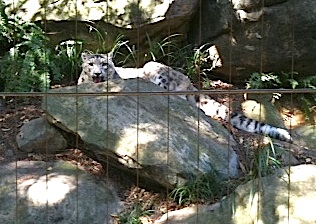
Siberian Snow Leopard
Huntsman Spider
Gorillas
Kimono Dragon
Aussie Crocodiles 

Toronga Zoo Videos
 
Chest beating Gorillas
 
Giraffes
 
Ostrich
 
Australian Pheasants
 
Meerkat
 
Lovey dovey Wallabies
 
Sea Turtle

Monday, March 7, 2011

2011 Mardi Gras in Sydney Australia

What began as a commemoration and a demonstration for New York's Stonewall Riots in 1969, the Sydney Mardi Gras which started in 1978 has grown from a protest march to a celebration of gay pride. Over the years it has attracted a growing number of participants who come from all over the world to be a part of the largest "must see, must do" event in the gay calendar. This year Hundreds of thousands of spectators crammed the streets of Sydney for the Australian city's 34th annual Gay and Lesbian Mardi Gras parade. Crowds lined the city's Oxford Street for the colorful and irreverent parade, which this year aimed to highlight marriage equality. At least 15 of the floats in the parade were themed to voice opposition against Australian laws on same-sex marriage, according to organizers. Popular groups Dykes on Bikes and Boys on Bikes rallied the crowd before the parade's official start. Openly gay Hollywood star Lily Tomlin was among well-known gay advocates who kicked off the party. It was an amazing event and if anyone can come down to Australia it should really be for this memorable and fun experience.
 Mardi Gras 2011 Parade Videos

Saturday, March 5, 2011

Royal Botanical Garden of Sydney

The Royal Botanic Gardens were first established in 1816 and they are now one of Sydney's finest natural assets. The gardens also offer some of the best views of Sydney Harbour, the Opera House and the Harbour Bridge possible. The 74 acres of gardens is home to over a million specimens, some of which were planted by the newly arrived European colonists almost 200 years ago. Sightings of possums and flying foxes, dragonflies, blue-tongued lizards, Australian birds, butterflies and an eel or two. People may enjoy discovering the giant lily-pads, the Herb Garden, the Glass Pyramid and the amazing Succulent Garden. The Royal Botanical Gardens attract more than 3 million visitors a year. The gardens were home to Australia's first vegtable patch planted by the British colony's first governor, Governor Arthur Phillip, who was the founder of the site which is now the city of Sydney.

Photos and Video from the Garden
An Ibis coming too close for comfort.
Me at the gates of the Royal Botanical Gardens
 Statue of a Ballerina
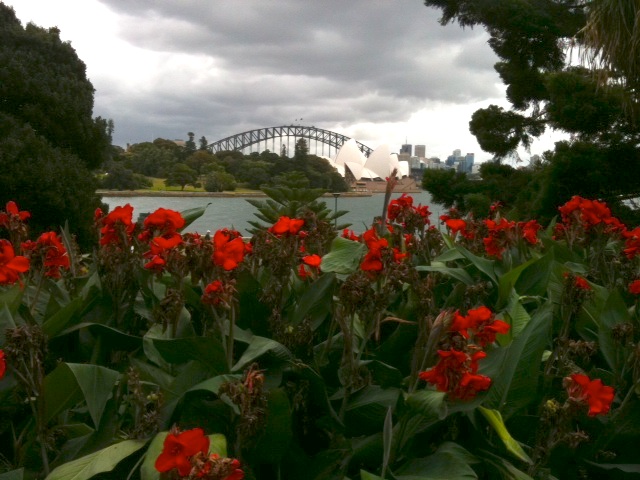
View from garden of the Sydney Opera House
 
Fountain at the garden
Bats roosting in a tree at the garden
 An Ibes near the pond
 Short red and yellow billed duck
Brendan sitting atop Mrs. McQuarie's chair
 
Water lilies in a pond

Thursday, March 3, 2011

Terracotta Warriors invade Sydney's Art Museum

 
Yesterday we visited the Art Gallery of New South Wales in Sydney where they had a fascinating exhibit on display, The Ancient Chinese Terracotta Army. Life size and extremely ancient, these figures, dating from 210 BC, were discovered in 1974 by some local farmers in Lintong District, Xi'an, Shaanxi province in China. These Terracotta warriors were placed in large pits near the Mausoleum of the First Qin Emperor, Qin Shi Huang and buried to serve as protection in the afterlife for the Emperor.  The terracotta figures are life-sized. They vary in height, uniform and hairstyle in accordance with rank. The coloured lacquer finish, individual facial features, and actual weapons and armor from battle used in manufacturing these figures created a realistic appearance. The figures vary in height, according to their roles, with the tallest being the generals. The figures include warriors, chariots, horses, officials, acrobats, strongmen and musicians. Current estimates are that in the three pits containing the Terracotta Army there were over 8,000 soldiers, 130 chariots with 520 horses and 150 cavalry horses, the majority of which are still buried in the pits.The original weapons were stolen by robbers shortly after the creation of the army and the colouring has faded greatly. However, their existence serves as a testament to the amount of labor and skill involved in their construction. It is impressive how powerful the First Emperor was that enabled him to command such a monumental undertaking. 
  
The Art Gallery is located in what is called The Domain in the city's center, and it is a large open space wihich adjoins the Royal Botanic Gardens and Hyde Park. There are beautiful statues, fountains and the landscaping is beautiful and serene, you can't help but relax and enjoy the view.

Wednesday, March 2, 2011

Kangaroo Marketing on Sydney's Oxford Street

I normally do a little guerilla marketing when I visit a town and especially when I am in a Gay neighborhood anywhere around the world. But I think because we are in Australia we should change that term to Kangaroo Marketing, it just makes more sense and is just a little more culturally sensitive to the Aussies and their ways. When in Sydney make sure to visit the largest Gayborhood of Darlinghurst and especially on Oxford Street which is filled with Gay stores, restaurants, bars and clubs. You would easily find their American equivalent in Santa Monica Blvd in West Hollywood, CA or 8th Ave in Chelsea or Christopher Street in the West Village. Well yesterday I went hopping around Kangaroo Marketing Boy Butter posters up around the street and visited a bunch of stores who are gearing up for the massive Mardi Gras celebrations that are happening around the city.
I love kangaroo marketing

Me and the manager of The Tool Shed in Sydney
next to a Boy Butter Display
Saint George Bank is getting in on the act.

These electrical boxes are better looking when they are buttered up.
BB poster on Oxford
Boy Butter poster at the Columbian Hotel and Bar
Potential customer walking past a Boy Butter poster on Oxford
A runner jogging past a BB poster
Oxford Street corner
BB poster at The Oxford bar.
I think my work here is done, till tomorrow.

Tuesday, March 1, 2011

My new Australian Hero, Olga Horak

Not only is there fun in the sun, beaches, kangaroos and koalas to be had in Australia during Mardi Gras there is also some culture to experience. Brendan and I visited the Sydney Jewish Museum to learn about the rich and beautiful history of the Jewish people of Australia from their earliest beginnings to the present day. Located in Darlinghurst neighborhood of Sydney's Jewish Museum is not only a place to learn about the Jews of Australia but how the country became a haven and refuge for Holocaust survivors after WWII. The museum has several holocaust survivors who volunteer and give testimony to what they went through during the Shoah (Holocaust) and one of those refugees from Czechoslovakia that we had the honor of meeting was Olga Horak, an 85 year old  woman who is the Elie Wiesel of Australia.
 Olga had just finished speaking to several large groups Aussie students when we casually bumped in to her as she was finishing her shift. She saw me and my star of David necklace and asked me where I was from and a natural and intimate conversation was struck. This woman spoke to us for about an hour and a half just the three of us walking and talking and we asked her so many questions of her experience of what it was like for a teenager from Bratislava to be arrested and sent to Aushwitz with her family, forced into grueling 12 hours a day slave labor digging trenches for tanks with almost no food and toward the end sent on a death march, when the camp was liberated she weighed only 29 kilos or 64 pounds and could not even stand up. It took her two years to recover, but she met her husband, married, and was able to gain entry to Australia where she chose to go as far away from Europe as she possibly could. Not only did she survive, she thrived, building a clothing business a large family and wonderful life which she is constantly giving back to the community and telling her story. We were so impressed and touched by this amazing woman that I immediately bought her book at the museum's bookstore, Auschwitz to Australia, A Holocaust Survivor's Memoir. 
Brendan, Olga and myself holding her book, Auschwitz to Australia

Video Interview of Olga Horak on 60 Minutes Australia

Followers